
The Industrial Singularity: Why the Hardest AI Transition Has Barely Started
Jack Dorsey and Roelof Botha published a piece that deserves close reading. In “From Hierarchy to Intelligence,” they argue that Block is replacing its management hierarchy with an AI-driven intelligence layer. The hierarchy, they say, was never really about authority. It was an information routing protocol. Humans were the only mechanism that could carry context up and down an organization at scale. AI removes that constraint.
They are describing a company rebuilt around agent-to-agent coordination instead of human-to-human coordination. The company “world model” replaces what middle managers used to carry in their heads. An intelligence layer composes financial capabilities into solutions for specific customers at specific moments. People move to the edge: oversight, judgment, exception handling.
This is the Organizational Singularity, whether they call it that or not.
Salim Ismail named this inflection point: the moment when agent-to-agent workflows become structurally faster and self-improving than human-to-human equivalents, and the gap becomes permanent. He calls it the Organizational Singularity. Block is one of the first large companies to publicly architect around it. They will not be the last. Every enterprise function built on information workflows (sales, marketing, finance, HR, legal) is approaching this threshold. The connectivity barrier is gone. The cost of AI reasoning has dropped 1,000x in 16 months. The structural economics have flipped.
But Block operates in financial services. Their agents route money, compose lending products, and personalize payment experiences. When an agent makes a bad decision, someone gets the wrong loan offer. That is recoverable.
Physical operations are a different problem entirely.
The Industrial Singularity
The Industrial Singularity is the equivalent inflection point for physical operations. It arrives when AI agent networks governing industrial assets, processes, and production systems become structurally more capable and faster-improving than any human-coordinated operational equivalent. And the compounding gap becomes permanent and unrecoverable.
This is not a technology forecast. It is a structural threshold. Organizations that cross it first will operate with compounding advantages in asset availability, maintenance cost, process yield, energy efficiency, and safety performance. Those advantages will widen over time, not narrow, because the agent networks continue to improve while human-coordinated operations improve only through project cycles and training programs.
Late movers will face a gap they cannot close by spending more or hiring faster. The other side is not standing still.
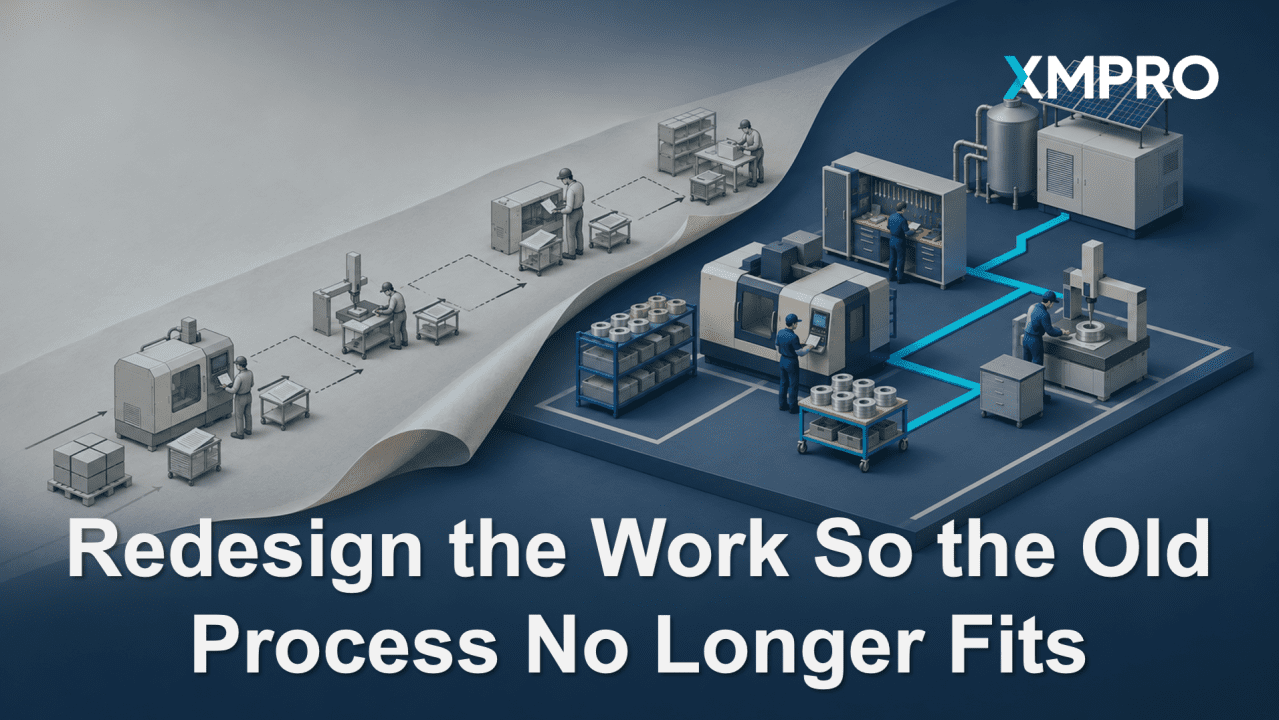
The Organizational Singularity and the Industrial Singularity are sequential. Most organizations will cross the first one before they confront the second. Their commercial and administrative functions will become agent-mediated through competitive pressure. The Industrial Singularity follows as the second and more structurally difficult transition.
Now imagine the organizations that get both right.
A mining company whose commercial agent network optimizes contracts, procurement, and market timing while its operational agent network optimizes extraction, processing, and maintenance across every site. The commercial side learns that a shift in commodity prices is coming. The operational side adjusts production schedules, maintenance windows, and energy consumption before any human notices the signal. The two networks inform each other continuously. Commercial intelligence sharpens operational decisions. Operational reality grounds commercial forecasts.
That is not a 10% efficiency gain. It is a structurally different kind of company. The advantage compounds in both directions simultaneously. And once that loop is running, it is very difficult for a competitor running human-coordinated operations on either side to close the gap.
Why the Industrial Singularity Is Harder
Block’s model works because their raw material is already machine-readable. Financial transactions are structured, digital, and honest. Every payment, every transfer, every loan repayment is a fact about someone’s financial life, recorded in a format that AI can reason from immediately.
Industrial operations have none of these properties. And that is why the Industrial Singularity requires three preconditions that the Organizational Singularity does not face.
1. Governance at the Physical Boundary
Enterprise AI agents operate in information space. A bad marketing decision costs budget. A bad financial reconciliation requires a correction. These are recoverable errors.
Industrial AI agents operate at the physical boundary. An agent that authorizes an incorrect control action can damage equipment. An agent that misdiagnoses a process condition can trigger a safety event. An agent that generates the wrong maintenance recommendation can cause catastrophic failure.
These consequences are not recoverable the way information errors are.
This means the Industrial Singularity requires a governance layer that the Organizational Singularity does not. Every agent action that affects a physical system must be authorized through a framework that tracks the basis for each decision, maintains confidence thresholds appropriate to consequence severity, escalates to human judgment when uncertainty exceeds safe boundaries, and creates an auditable record that satisfies safety and regulatory requirements.
This is not bureaucratic overhead. It is the precondition that makes the Industrial Singularity safe to deploy at scale rather than catastrophically dangerous.
2. The Integration Wall
Enterprise systems (CRM, ERP, email, finance platforms) were designed in an era when connectivity was assumed. Making AI agents perceive and act on enterprise data is largely a configuration and orchestration problem.
Industrial OT systems were designed under the opposite assumption. Operational technology (DCS, SCADA, PLCs, historians, condition monitoring platforms, CMMS) was built over fifty years to be isolated, deterministic, and secure. These systems were never designed to be read by external agents, let alone written to by them. They use proprietary protocols, vendor-specific data models, and site-specific tag naming conventions that carry no semantic meaning outside the plant where they were installed.
Until an AI system can actually perceive the real plant and act on real assets, the Industrial Singularity cannot begin.
Making these systems agent-readable requires purpose-built integration libraries across process industry stacks and discrete manufacturing stacks. Not generic API wrappers. Deep connectors that understand the data model, the protocol, the temporal structure of the data (time-series causality is fundamentally different from transactional records), and the semantic context that makes a reading interpretable.
This integration wall cannot be crossed by configuring a general-purpose AI platform. It is an engineering problem measured in years and decades, not sprints.
3. The Tribal Knowledge Threshold
Enterprise operations run primarily on structured data. Transactions, records, emails, contracts. The gap between what is in the data and what an experienced employee knows is real but manageable.
Industrial operations run on approximately 80% unstructured, tacit, and contextual knowledge. The experienced operator who knows why the feed pump on Train 3 behaves differently in cold weather. The maintenance technician who recognizes a specific vibration signature that precedes a bearing failure, not documented in any manual. The control room engineer who knows which combination of alarm states indicates a real upset versus a sensor drift.
This knowledge exists in the heads of people who have spent years on a specific plant. It is not in the historian. It is not in the CMMS. It is not in any structured database.
When that operator retires, the knowledge retires with them.
An AI agent trying to diagnose an anomaly without this context is reasoning from a 20% signal. The decisions it makes will reflect that incompleteness in ways that are difficult to predict and potentially dangerous.
The tribal knowledge threshold is the point at which enough operational identity and contextual knowledge has been encoded into a form that agents can reason from. Not as static documentation, but as live, asset-specific context that captures the accumulated operational intelligence of the plant. Until this threshold is crossed, industrial AI agents are reasoning blind. Once it is crossed, they have access to operational intelligence that no new employee or external consultant can replicate.
Recommended by LinkedIn
What Changes When All Three Are in Place
When governance at the physical boundary, the integration layer, and the tribal knowledge layer are all in place, the dynamics of industrial operations change fundamentally.
Continuous monitoring without fatigue.
Agent networks monitor every asset, every process condition, and every anomaly signal continuously. Across every shift, every site, every weather condition. Without the attention limits, handover gaps, and availability constraints of human-managed monitoring.
Recursive operational improvement.
The AI world is consumed right now by one idea: recursive self-improvement. AI systems that improve their own capabilities, where each generation of the model helps build the next one faster and better. It is the concept at the center of every frontier lab’s strategy.
The same structural logic applies to industrial operations, and nobody is talking about it.
Each diagnostic cycle, each maintenance intervention, each process optimization generates feedback that makes the next cycle more accurate. An agent network that diagnoses a bearing failure learns from the outcome. The next time it sees a similar vibration signature, it catches it earlier, with higher confidence, and recommends a more precise intervention. That improved diagnosis generates better outcome data. The cycle repeats.
Human-managed programs improve through project cycles and training programs. Someone writes a report. A team reviews it quarterly. Best practices get updated annually. Agent-mediated programs improve continuously, after every event, across every asset, without waiting for the next review cycle. This is recursive self-improvement applied to physical operations. Not as a theoretical concept. As an operational reality available to any organization that has the three preconditions in place.
The gap between agent-mediated and human-coordinated operations does not stay constant. It compounds with every cycle. And unlike recursive improvement in AI models (which is still largely a research frontier), recursive improvement in industrial operations is grounded in measurable physical outcomes: uptime, yield, energy efficiency, safety incidents avoided. The feedback signal is not abstract. It is concrete and auditable.
Knowledge that does not retire.
When the tribal knowledge layer is in place, operational intelligence is no longer at risk of walking out the door. The departure of a senior operator no longer represents an irreplaceable knowledge loss. It represents a transition from human-held to system-held knowledge.
Decision quality at scale.
A human team of ten engineers can apply expert judgment to ten critical assets at a time. An agent network can apply equivalent reasoning, informed by the tribal knowledge layer and constrained by the governance framework, across an entire asset fleet simultaneously. The question is not whether the agents are as good as the best engineer. It is whether they are better than the average decision quality across an entire fleet at scale.
The Competitive Threshold
The Industrial Singularity is not a technology horizon. It is a competitive threshold.
Block’s argument about information work applies with even greater force to physical operations. Dorsey and Botha write that hierarchy was an information routing protocol built around a human limitation: a leader can effectively manage somewhere between three and eight people. Remove the human constraint and the routing protocol changes.
In industrial operations, the equivalent constraint is tighter. An experienced engineer can hold detailed operational context for perhaps ten to fifteen critical assets. A plant has thousands. The coordination gap between what humans can track and what the operation requires has always existed. It was managed through shift handovers, maintenance schedules, inspection rounds, and the institutional memory of long-tenured operators.
Agent networks close that gap. Not incrementally. Structurally.
The organizations that cross the Industrial Singularity threshold first will not have a one-time advantage. They will have a compounding one. Their agent networks will continue to improve, their operational knowledge will continue to accumulate, and their governance frameworks will continue to mature. The gap between them and organizations still running human-coordinated operations will widen every quarter.
This Is Not About Replacing People
A necessary clarification. The Industrial Singularity is not a story about AI taking jobs from operators and engineers. It is a story about organizations operating at their full potential for the first time.
Today, a mine with 3,000 critical assets has perhaps 15 engineers who can apply expert judgment to operational decisions. The rest of the fleet runs on schedules, rules of thumb, and the hope that nothing fails between inspection rounds. That is not full potential. That is managed scarcity of expertise. Agent networks do not replace the 15 engineers. They extend their judgment across the entire fleet, continuously, without the constraints of shifts, fatigue, and handover gaps.
The result is not fewer people. It is an operation that can produce more, with better quality, lower waste, and fewer safety incidents. That is abundance created by operating at full potential. I will explore what that abundance looks like at the macro scale, and what it means when the operations that supply the global economy cross this threshold, in a follow-up article.
The Organizational Singularity Is Underway. The Industrial Singularity Is the Frontier.
Block has shown us what it looks like when a company replaces hierarchy with intelligence for information work. The pattern will spread. Within five years, agent-mediated coordination of enterprise functions will be the operational baseline for leading companies.
But the factory floor, the mine site, the refinery, and the power station are still waiting. Not because the idea is wrong. Because the preconditions are harder. Governance at the physical boundary. Integration across fifty years of isolated OT infrastructure. Encoding the tribal knowledge that experienced operators carry and that no structured database has ever captured.
The Industrial Singularity does not arrive by deploying general-purpose AI tools. It requires purpose-built architecture for physical operations.
The question for every industrial operator is not whether this threshold exists. It does. The question is whether you are building the three preconditions now, or whether you will be trying to close a compounding gap later.
The organizations that begin now will reach the threshold first. The ones that wait will face a gap they cannot close through effort or investment alone.
The Organizational Singularity is underway. The Industrial Singularity is the frontier. And the frontier does not wait.
Pieter van Schalkwyk is the CEO of XMPro. He writes about the intersection of industrial operations, AI agent systems, and operational strategy at The Digital Engineer.
If you want to explore what the Industrial Singularity means for your operations, reach out to Gavin Green or visit the XMPro GitHub repo for open-source resources.
Subscribe to The Digital Engineer newsletter for weekly perspectives on agentic operations and the future of industrial intelligence.
This article originally appeared on XMPro CEO’s LinkedIn blog, The Digital Engineer, on 15 April 2026.