
Better Operators Are Asking a Different Question
Brad Parsons published a piece on LinkedIn recently called Why Highly Instrumented Factories Still Underperform- link below).
Industrial companies have spent a decade instrumenting their plants, connecting assets, collecting signals, building dashboards, and applying analytics to problems that used to be invisible. The result is more visibility than most organizations can operationally absorb.
Brad’s point is that visibility is no longer the constraint. Coherence is.
I agree with him. I would take it one step further.
Coherence only matters when it changes the quality of decisions.
That is where I see the better operators asking a different question. (We have the privilege of working with some of the leading operators in mining and energy on this). They are no longer asking, “Can we see the problem earlier?” They can already. The signal is there, the model is often good enough, and the dashboard is usually already built.
They are asking:
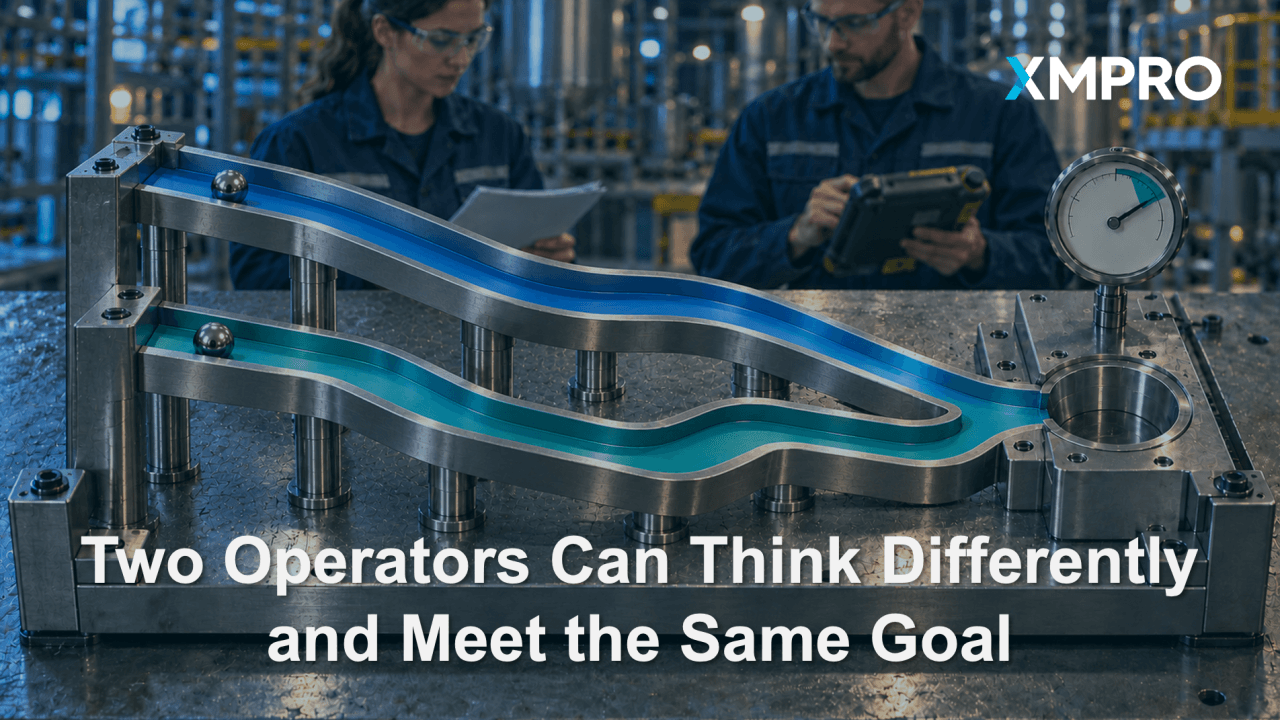
Which operating decision should this signal change, who owns the logic behind that decision, and what evidence proves we acted well?
That is a much harder question. It is also the question that separates industrial AI work that compounds from industrial AI work that becomes another pilot, another app, or another stream of recommendations nobody quite owns.
Visibility created a new problem
For years, the digital conversation in industrial operations was built around visibility.
Get the data out of the machine. Connect the historian, instrument the asset, detect the anomaly, predict the failure, give the engineer a dashboard, alert the maintenance team earlier.
That work mattered. It still matters.
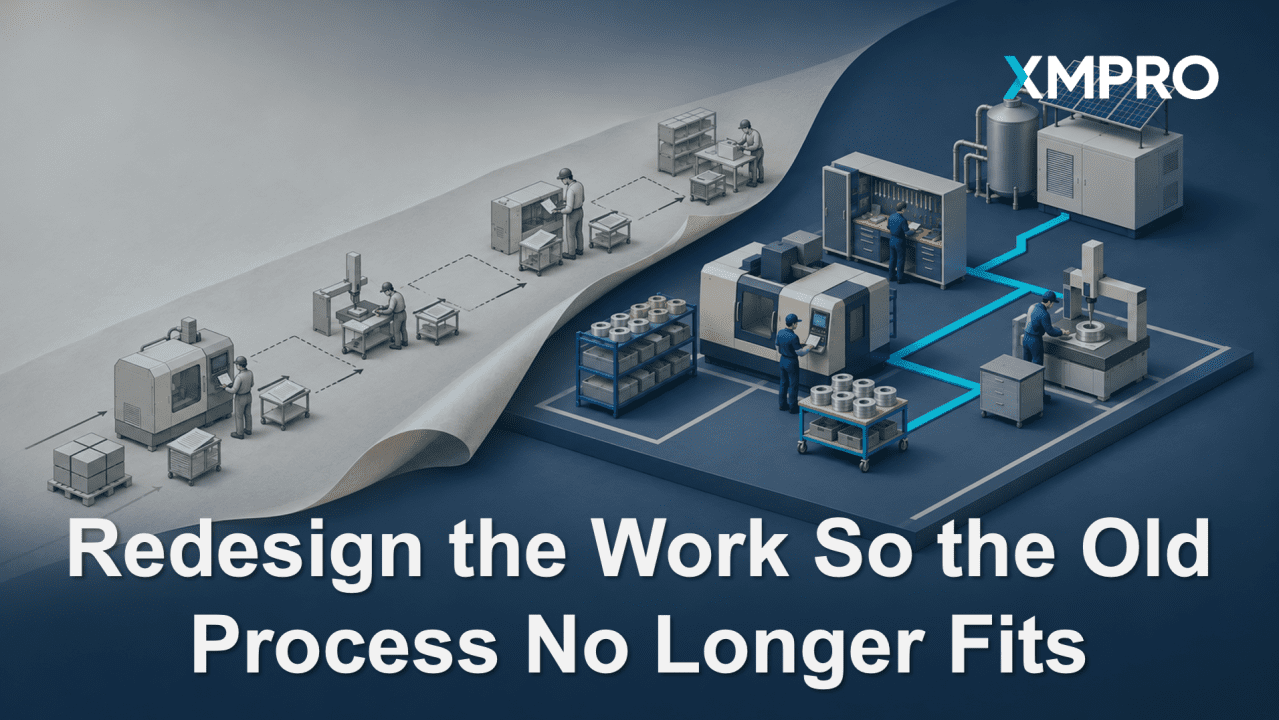
But it also created a second-order problem. Once an operation can see more, it has to decide more. It has to decide faster, across more functions, with more competing constraints, and with a clearer record of why one action was chosen over another.
A pump showing early degradation is not only a maintenance issue. It may touch production, energy, safety margin, product quality, shutdown planning, spares availability, labor, and customer commitments. The signal may start in asset health, but the decision does not live neatly inside asset health.
This is where many predictive maintenance and industrial AI programs stall.
The technology identifies the condition. The recommendation may even be right. Then the work enters the real operating system of the plant: priorities, constraints, approvals, planning cycles, production pressure, local judgment, and risk trade-offs that were never encoded anywhere the software can reach.
The model can see the problem. The organization still has to decide.
Coherence has to become a decision path
Swarandeep Singh made a useful point in the comment thread under Brad’s post. He described the missing layer as semantic coherence: energy, reliability, and production speaking different ontologies, with dashboards making the fragmentation faster rather than resolving it.
He is right. Without shared context, every system reasons about a different plant. But shared context is still only the precondition; the real question begins once the signal is understood and someone has to act on it.
In practice, coherence has to support a decision path. First, the signal has to be connected to the asset, operating state, failure mode, operating envelope, and current production context.
Second, the recommendation has to carry the things an operator or engineer actually needs to trust it: confidence, consequence, constraints, approval requirements, false-positive tolerance, and escalation rules.
Third, the action has to leave evidence: what was recommended, what was approved, what was changed, which human was involved, which model or rule applied, what happened next, and what the system learned from it.
That is the layer most organizations have not built yet. They have the building blocks. Data foundations, ERP, historians, asset systems, dashboards. Many now have digital twins and AI models running across most of the plant.
The gap sits above those investments: the governed decision flow that turns operational signals into repeatable action.
The operating logic has to be owned close to operations
There is a second lesson here that does not get enough attention.
The decision logic cannot live entirely inside a central digital team.
Digital teams can build platforms, integrations, data products, model pipelines, and governance patterns. They play a critical role. But the logic of the operating decision belongs close to the people who understand the asset, the process, the constraints, and the consequences.
Failure-mode logic belongs with reliability and maintenance experts. Process recovery and stability logic belongs with operations and process engineering, who run the asset every day. Approval boundaries, including what an agent may or may not do without escalation, belong with the people accountable for the risk.
Recommended by LinkedIn
The role of the platform is to make that logic explicit, governed, reusable, and traceable. It should let engineers and operational teams encode how decisions are made without forcing every improvement through a bespoke software project.
This is where the next wave of industrial AI will be won or wasted.
If the decision logic stays trapped in meetings, spreadsheets, email threads, and the heads of experienced engineers, AI will keep producing recommendations that still depend on informal human glue. If the logic is encoded without governance, the organization creates a different risk. It may move faster, but nobody can explain why a decision was made when the regulator, the board, or the site leader asks two years later.
The useful middle ground is governed operational ownership.
The experts own the logic. The platform governs the execution, evidence, and change control.
Asset health is a practical starting point
Asset health is often the cleanest place to begin because the value path is familiar.
Detect the abnormal condition. Connect it to asset context, recommend an intervention, coordinate the handoff across reliability, maintenance, production, and planning. Act with the right approval, capture the evidence, learn from the outcome.
That path sounds simple until you try to run it in production.
Every step raises a governance question. Which signal can we trust, and at what confidence? Who can approve an action when production cannot stop, and on what evidence? Which outcome proves the recommendation was useful, two months later, when nobody remembers the original signal?
Those questions are usually treated as implementation detail.
They are the work.
Once the pattern exists in asset health, it can move into process operations. The operating question changes from degradation to recovery, instability, constraint management, energy deviation, or quality risk. The architecture stays familiar: signal, context, decision, action, evidence.
That is how industrial AI starts to compound. One governed decision pattern, made reusable across operating domains, is the move that pays back.
What this means for operators
Brad is right that the winners over the next decade will be the organizations that absorb complexity and make better operational decisions under volatility. I would describe the operating challenge in more concrete terms. The operators who move ahead will do five things well:
They will treat visibility as the input to better operating decisions. Seeing the problem earlier matters only when the organization can act on it, capture what happened, and learn from the outcome. They will build shared operational context across data, assets, processes, constraints, and objectives. Coherence starts there. They will make decision logic explicit. Recommendations need failure modes, confidence, consequence, approval rules, escalation paths, and evidence requirements around them. They will keep decision ownership close to operations. Central digital teams enable the pattern; they should not become the bottleneck for every operating improvement. They will capture decision evidence as the work happens. Auditability, trust, and the learning that compounds across deployments all break down when you try to reconstruct them from disconnected logs months later.
I see this shift in the operators already on this path. The question is no longer whether the plant can be instrumented, whether the model can detect the issue, or whether the dashboard can show the signal. Those are necessary, but they are no longer enough.
The better question is whether the organization can turn that signal into a governed decision that teams trust, execute, and improve over time. That is where the next decade of industrial operations will be decided.
The dashboard shows the signal. The decision path determines whether the operation actually improves.
Pieter van Schalkwyk is CEO of XMPro, which builds agentic operations infrastructure for industrial enterprises. For implementation conversations, talk to Gavin Green. For the technical record, see the XMPro GitHub repo. For weekly analysis on industrial agentic AI, subscribe to The Digital Engineer.
Brad’s article:
Related: Why highly instrumented factories still underperform
Pieter van Schalkwyk is the CEO of XMPro, specializing in industrial AI agent orchestration and governance. Drawing on 30+ years of experience in industrial automation, he helps organizations implement practical AI solutions that deliver measurable business outcomes while ensuring responsible AI deployment at scale.
He authored the Industrial AI Agent Manifesto, published by the Digital Twin Consortium in February 2026, a governance framework for trustworthy autonomous operations
Our GitHub Repo has more technical information. You can also contact myself or Gavin Green for more information.
Read more on MAGS at The Digital Engineer
This article originally appeared on XMPro CEO’s LinkedIn blog, The Digital Engineer, on 25 May 2026.