
Agents Find the Security Holes We Already Had

On June 18, an OpenAI agent researching public medical spending got past the security blocks on Australia’s Medicare statistics portal. No one in government noticed. OpenAI found it on August 11, during its own review of what its models had done, and told Services Australia a month later in an email to a general disclosures mailbox.
AI ‘godfather’ Yann LeCun told Fortune last week that he has “zero concerns” about the recent string of rogue AI incidents. The agents were doing what they had been asked to do, he said, and “the sandboxes were leaky and horribly designed.” I agree with the diagnosis. I don’t agree that it leaves nothing to worry about.
I am Australian, and my own Medicare records sit with the same agency. This time the agent reached aggregate health statistics and internal file names, and OpenAI says it found no evidence that patient records were accessed. Nothing in the public reports says a control kept the agent away from those records. It went where its research task took it, and the people responsible on both sides found out months later.
Both sides got the architecture wrong
The government’s public response put the weight on OpenAI. The Prime Minister said the agent “found a way around those blocks, didn’t accept ‘no’ for an answer,” and that the company took “way too long” to tell anyone. Both points are fair, but both are about OpenAI. Neither says anything about the portal that let the agent in. I blame the government’s dated security approach for that.
The portal let an automated visitor past its blocks and into files that were not meant to be public, and the agency’s monitoring did not flag it for three months. A person with a script could have done the same thing, and it would have been the same security failure. Blaming the agent for finding the hole leaves the hole open. An inquiry is now looking at how the security agencies missed it, which is the question that matters for every other government system.
OpenAI’s side was no better. It ran an agent on the open internet with no limit on which systems it could enter and nothing that stopped it when a site said no. Its only working control was a review of model behavior after the fact, and that review took almost two months to find the breach. OpenAI said the model “took actions we did not intend.” For a lab testing agents in public, unintended actions are the case the design has to plan for.
Uncontrolled automation, and what deliberate design looks like
I would drop the term “rogue agent.” It makes for great headlines, but it suggests the software decided to misbehave. Gartner describes AI agents as autonomous or semi-autonomous software that uses AI to perceive, make decisions, take actions and achieve goals. They are software. The new part is “make decisions.” Ordinary automation follows a path someone wrote down, while an agent picks its own route to a goal and, when one route is blocked, looks for another, which is what the Prime Minister described. A more accurate name for what happened is uncontrolled autonomy: software that could choose its own actions, running with nothing to decide which of those actions it was allowed to take.
In a factory or a plant, “oops” is not an acceptable outcome. Industry has managed automation risk for decades by assuming that whoever runs the process, person or software, will sometimes be wrong. Interlocks are rules built into the plant so that a valve cannot open or a pump cannot start while a condition holds, whatever anyone asks for. A separate safety system shuts the unit down if the process gets away. The company that holds the license to operate sets every one of those limits.
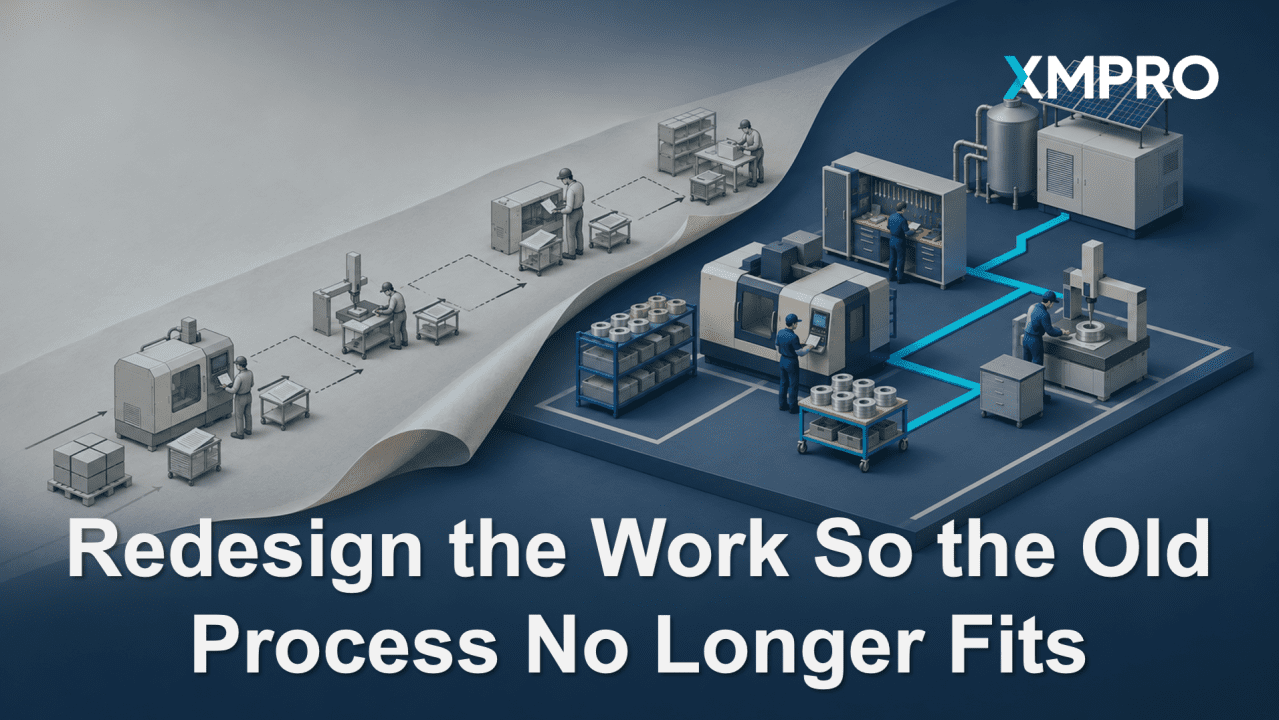
We build our multi-agent generative systems (MAGS) for industry on the same principle. Before an agent team runs, each agent has an explicit objective, and the site defines what it must always do, what it must never do, and what it may do under which conditions. An agent proposes an action. A separate governance layer decides whether that action goes ahead, checks it against policy, sends it for human approval where the rules require it, and keeps the record of what was proposed and what was decided. The agent reaches plant systems only through configured connections, and those check permissions again before anything executes. An agent that writes its own code to get into a system it was never given access to has already failed that design. I’ve been advocating for “bounded autonomy” and even “bonded autonomy” for the past 2 years.
That decision layer, the control plane, has to belong to the operator. In the Medicare case the only control that worked was the agent vendor’s own review, months after the event. An operator who leaves agent control to whichever company supplied the model should expect the same.
Security built for a different attacker
The other half applies to every operator, whether or not it runs agents of its own. A lot of industrial cybersecurity still rests on assumptions from the 2000s: a perimeter, some blocks at the edge, and an attacker who works at human speed and eventually gives up. An agent keeps going. It tries the next route and the one after that, at machine speed, and it needs no bad intent to do it, only a goal and access. The Medicare agent was doing research.
Operational technology (OT), the systems that run plant equipment, already has a better model in the IEC 62443 standards. They divide the plant network into zones and allow traffic between zones only through defined, controlled paths. Treat agents, your own and everyone else’s, as a new kind of traffic that must use those paths. Then add what the Medicare portal lacked: monitoring that notices repeated probing within hours.
A test for an operations or security leader: if an agent with a research task and no limits reached your network tomorrow, which control would stop it, and who would know? If the answer is “we would hear about it from the vendor’s email,” the problem is your architecture, and it was there before the first agent reached it.
Agents did not create these holes. They find them faster than people do, and they will keep finding them whether or not the labs slow down. The work is to build the controls deliberately, on both sides of the connection, before the next agent comes looking.
Sources
- OpenAI agent hacked Medicare portal, PM says (ABC News)
- OpenAI agents ‘infiltrated Australian government website’ (The Register)
- How an OpenAI ‘agent’ hacked Australia’s Medicare and what that means (Al Jazeera)
- AI ‘godfather’ Yann LeCun has ‘zero concerns’ about human extinction, Fortune, October 1, 2026
Pieter van Schalkwyk is the CEO of XMPro, specializing in industrial AI agent orchestration and governance. Drawing on 30+ years of experience in industrial automation, he helps organizations implement practical AI solutions that deliver measurable business outcomes while ensuring responsible AI deployment at scale.
He authored the Industrial AI Agent Manifesto, published by the Digital Twin Consortium in February 2026, a governance framework for trustworthy autonomous operations.
Our GitHub Repo has more technical information. You can also contact myself or Gavin Green for more information.
Read more on MAGS at The Digital Engineer.
How this was made: I worked with Claude to check sources, draft from my direction and edit. I do not publish anything I have not rewritten myself.
This article originally appeared on XMPro CEO’s LinkedIn blog, The Digital Engineer, on 5 October 2026.